
Amex Roofing blog

What the first storm shows.

Rain can reveal leaks that went unnoticed through summer. After the storm, observations from the ground or indoors can help explain what happened.

Book a free inspection
(510) 761-8120 Text us amexroofingca@gmail.com

300+ permitted projects listed on BuildZoom. CSLB #968341.

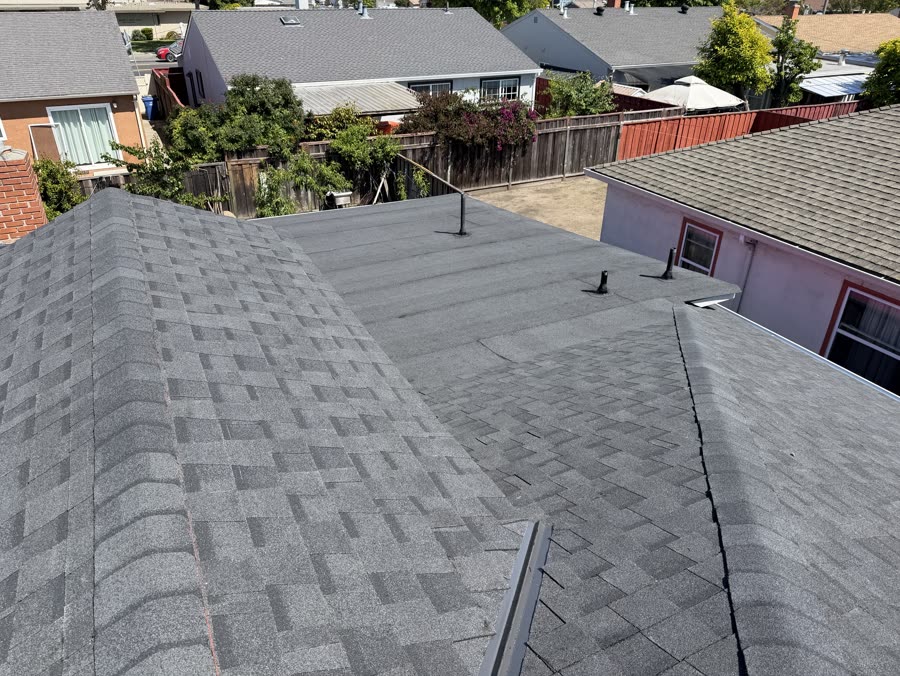
Transition between a low-slope roof section and shingled slope on a Bay Area home

On this page

  1. 01The rain window
  2. 02Your part of the city
  3. 03Joints and openings
  4. 04After the rain
Stay off a wet roof. Wait until the storm has passed and conditions are safe before checking outdoors. Use the ground, indoor rooms, or a safely accessible attic for observations. A wet or damaged roof is unsafe to walk on.

The pattern

Most rain falls during the wet season.

NOAA’s April 1999 Climate of San Jose memo reports 82 percent of yearly rainfall between November and March, and a June through August total of 0.20 inches. The figures below describe the historical climate summarized in that memo. Significant rain can also fall outside those months.

November to March

82% of the yearly total

The memo places most annual rainfall within these five months.

June to August

0.20 inches in the memo

The historical summer total is much lower than the wet-season total.

Valley versus hills

About one quarter

The memo describes San Jose’s rain shadow and rainfall at roughly a quarter of the Santa Cruz Mountains’ total.

Within city limits

13.5 to 24 inches

The memo’s annual range runs from near the bay to the southern edge near Los Gatos.

Local variation

Why rainfall differs across San Jose.

The memo describes rainfall decreasing from south to north. Its 20-inch contour rings all but the northern part of San Jose, while the 14-inch contour runs roughly east to west north of the airport. These are historical annual averages.

The figures help explain differences in rainfall exposure within one city. An inspection is still needed to assess a particular roof’s condition and whether it needs work.

Roof details

Where water can enter.

Flashing directs water away from places where a roof meets a wall, chimney or pipe. Loose or damaged flashing can allow water to enter at those joints.

Rain after a dry stretch may reveal an opening that had not caused a noticeable leak. Wind or falling debris can also create new damage. The timing of a leak alone does not tell you when the problem began.

Our Santa Clara roof repair shows membrane work around skylights, vents and roof transitions.

Afterwards

What is worth noticing after the first real rain.

Record what you can see safely from indoors or the ground after the storm. Photos and notes can help the inspector understand a leak that is no longer visible on the day of the visit.

01Indoors

Look at ceilings and the tops of walls first.

Check ceilings under the roof, the tops of exterior walls, and areas around chimneys and skylights. Stains or dampness need investigation; roof leaks, plumbing leaks and condensation can all cause interior moisture.

Look for: a brown ring that was not there before, damp or softened drywall, bubbling paint, or a stain that darkens during a storm and fades afterwards.
02The attic

If the attic is safely accessible, check for moisture.

Only enter an attic you can safely access. Use a flashlight from secure footing to look for moisture. Staining and rusty nail tips may reflect past leaks or condensation, so they do not establish an active roof leak on their own.

Look for: damp roof decking or insulation, water marks, or a change since your last safe observation.
03From the ground

Check drainage once the storm has passed.

Once conditions are safe, look from the ground for signs of overflow or blocked drainage. Stay indoors during thunder and lightning. Do not climb a ladder or step onto the roof to investigate.

Look for: debris at downspout outlets, water marks below gutters, or water still dripping at a roof-to-wall or low-slope roof transition.
04Write it down

Record the date, the location, and which storm it was.

Leaks can come and go with changes in wind and rain. A dated note and photos help the inspector compare what you saw with the roof’s condition at the visit.

Useful to note: when it appeared, whether the wind was driving from a particular direction, and whether it stopped when the rain stopped.

Not sure whether what you saw matters?

An inspection covers visible, safely accessible roof areas. Some leak causes need further checking. See what the inspection includes and how we provide a written work scope. Request a date and a one-hour arrival window; we will confirm by phone.

Book a free inspection

For checks in any season, see seven roof warning signs worth checking. The written-scope FAQ explains what to ask for before approving work.

Amex Roofing is based in San Jose and handles roof inspections, repairs and replacements across the Bay Area, including Menlo Park, San Mateo, San Leandro, Fremont, Hayward and Milpitas.

Sources

Historical rainfall figures are from NOAA Technical Memorandum NWS WR-259, Climate of San Jose, Miguel Miller, National Weather Service Forecast Office, April 1999.

Share this guide

Facebook Share on X

Schedule a roof inspection

Request a date and a one-hour arrival window for a free inspection. We will confirm the appointment by phone.